
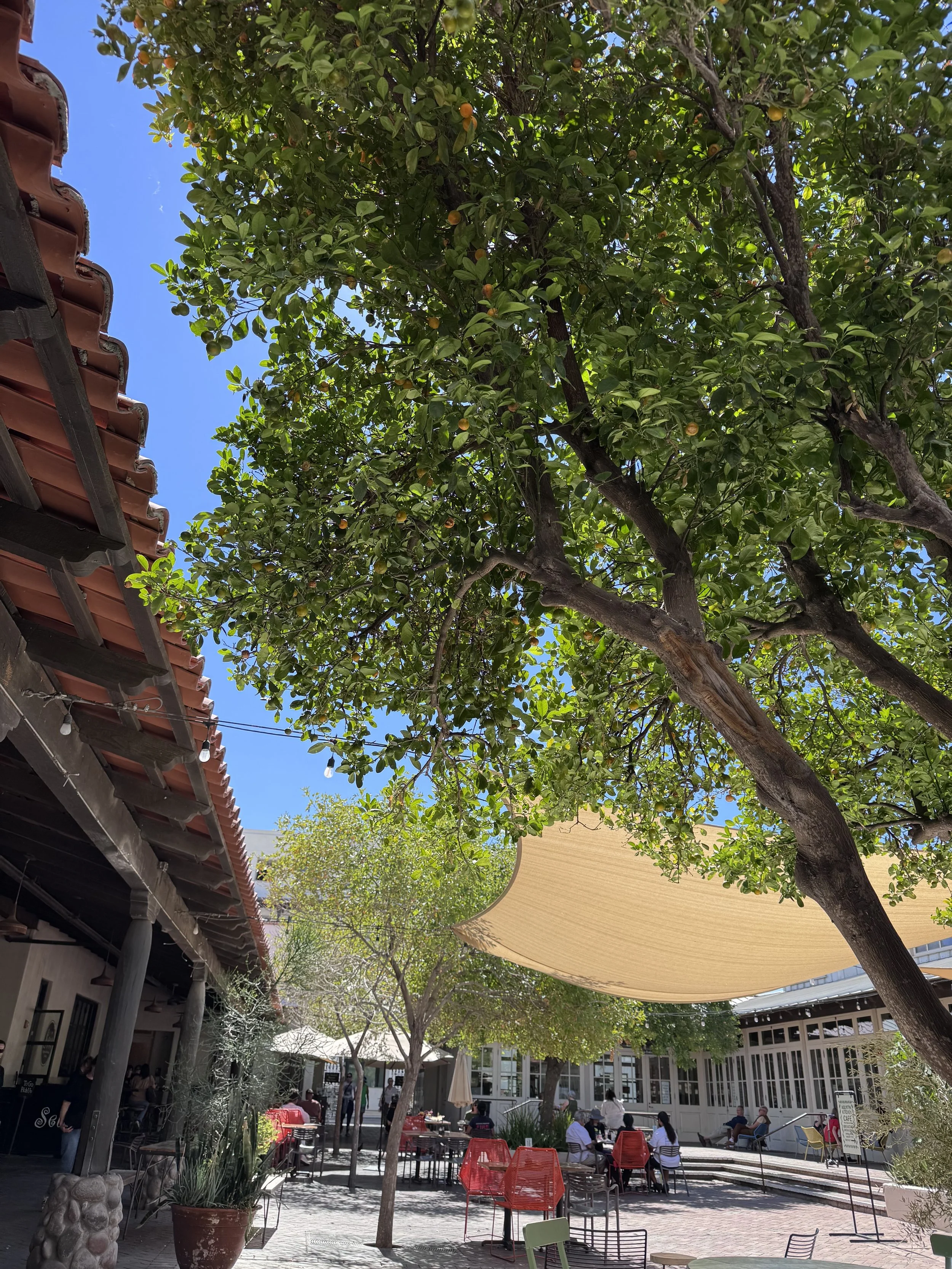
Mercado San Augustin, Tucson
What are courtyards and ramadas in Tucson homes? A courtyard is an enclosed outdoor space at the heart of a home, a tradition seen in historic Tucson adobe houses and echoed in modern designs. A ramada is a roofed, open-sided shade structure rooted in the building traditions of the Sonoran Desert’s O’odham peoples, and today the term also covers freestanding shade structures and covered patios. Together, these features explain why outdoor living is such a big part of Tucson homes.
Why Outdoor Space Matters in a Tucson Home
Picture a late afternoon in Tucson. The sun is low, the light is gold on the Catalinas, and someone is sitting in the shade with a cold drink, watching the colors change.
That scene is the reason outdoor spaces carry so much weight in Tucson homes. In a place with strong sun, shade is what makes outdoor time possible, and generations of builders here have designed around it. Here is a plain-language guide to the features you will see in listings.
Courtyards: The Outdoor Room at the Heart of the House
A courtyard is an enclosed outdoor space surrounded by the home, its walls, or both. It is one of the oldest ideas in the region’s architecture. The Society of Architectural Historians notes that historic Spanish-influenced row houses in Tucson’s barrios were arranged around a courtyard or central plaza, creating a protected outdoor space inside the walls.
The idea carried into later styles. Spanish Colonial Revival homes in the Catalina Foothills often include courtyards, and architect Josias Joesler’s Foothills homes commonly feature enclosed patios and porches. Many newer Tucson homes continue the tradition with courtyard entries and private patios.
Pro Tip: When you tour a home with a courtyard, look at how the rooms open onto it. That connection is often the heart of the floor plan.
Ramadas: A Desert Tradition
A ramada is a roofed shade structure without walls, typically held up by four posts. The word comes from the Spanish rama, meaning branch, and traditional ramadas were roofed with brush or branches.
According to the National Park Service, the O’odham peoples built ramadas in the Sonoran Desert using materials the desert provides: mesquite for the posts, and the woody ribs of saguaro and ocotillo for the roof. In O’odham, a structure like this is called a wa:ato. The Salt River Pima-Maricopa Indian Community notes that ramadas were built beside, and sometimes attached to, nearly every home, and that many daily activities took place under the shade of the ramada rather than inside the house.
Today you will see the same idea in many forms around Tucson, from rustic pole-and-branch versions to freestanding structures with solid or slatted roofs. The word is also used for open porches and breezeways, so a listing that mentions a ramada could mean a few different things. Photos and your agent can help you see exactly what it is.
Covered Patios and Porches
A covered patio is a roofed outdoor area, usually attached to the house. Covered porches and breezeways serve a similar role as transitions between indoors and out. Spanish Colonial Revival homes often include breezeways as part of the design.
Covered patios are one of the most common outdoor features in Tucson listings, and they come in many styles, from simple extensions of the roofline to detailed spaces designed as outdoor rooms.
Features That Often Go Together
Outdoor living in Tucson is usually a combination of ideas. You may see:
a courtyard entry leading into the home
a covered patio off the main living area
a freestanding ramada in the yard
shaded seating areas with desert landscaping around them
enclosed walls or fences that create privacy
Pro Tip: Visit shaded outdoor areas at different times of day to see how the light moves across them.
Where to See These Features in Person
Walking through Barrio Viejo shows how courtyard living has shaped Tucson’s oldest neighborhoods, and guided walking tours explore the area’s adobe architecture. Tohono Chul, a local botanical garden, has a Desert Living Courtyard with small vignettes that demonstrate home-scale gardening concepts, including a Barrio Garden, a Dry Shade Garden, and a Meditation Garden.
Finding the Outdoor Space You Want
If you are researching Tucson from out of town, outdoor living is a great way to narrow your search. Some people picture a courtyard, some picture a covered patio with a view, and some want a ramada in the yard. Kristen can help you search with those preferences in mind.
Frequently Asked Questions
What is a ramada?
A ramada is a roofed shade structure with open sides, traditionally built from mesquite posts and a roof of brush, saguaro ribs, or ocotillo. Today the word is also used for freestanding shade structures and covered porches.
Where does the word ramada come from?
It comes from the Spanish word rama, meaning branch, because traditional ramadas were roofed with branches or brush.
Who built the first ramadas in the Sonoran Desert?
Ramadas are a long-standing tradition of the Sonoran Desert’s O’odham peoples, who built them as shade structures next to, and sometimes attached to, their homes.
What is a courtyard house?
It is a home arranged around an enclosed outdoor space, so that the courtyard becomes part of the living area. The style is common in historic Tucson architecture.
What is the difference between a ramada and a covered patio?
A ramada is typically a freestanding shade structure with open sides, while a covered patio is usually a roofed area attached to the house. In practice, the terms overlap, so check the photos and ask your agent.
Presented by:
KRISTEN GLASHEEN | REALTOR® | LONG REALTY
GLASHEEN REAL ESTATE
Contact Kristen:
☎️ Call: 520.345.9360
📱 Text: 520.345.9360
📧 Email: Kristen@GlasheenRealEstate.com
🏠 Search Homes
Disclaimer: Glasheen Real Estate is not an architect, builder, or contractor. Descriptions of outdoor features are general, and individual homes vary. This content is for informational purposes only.