
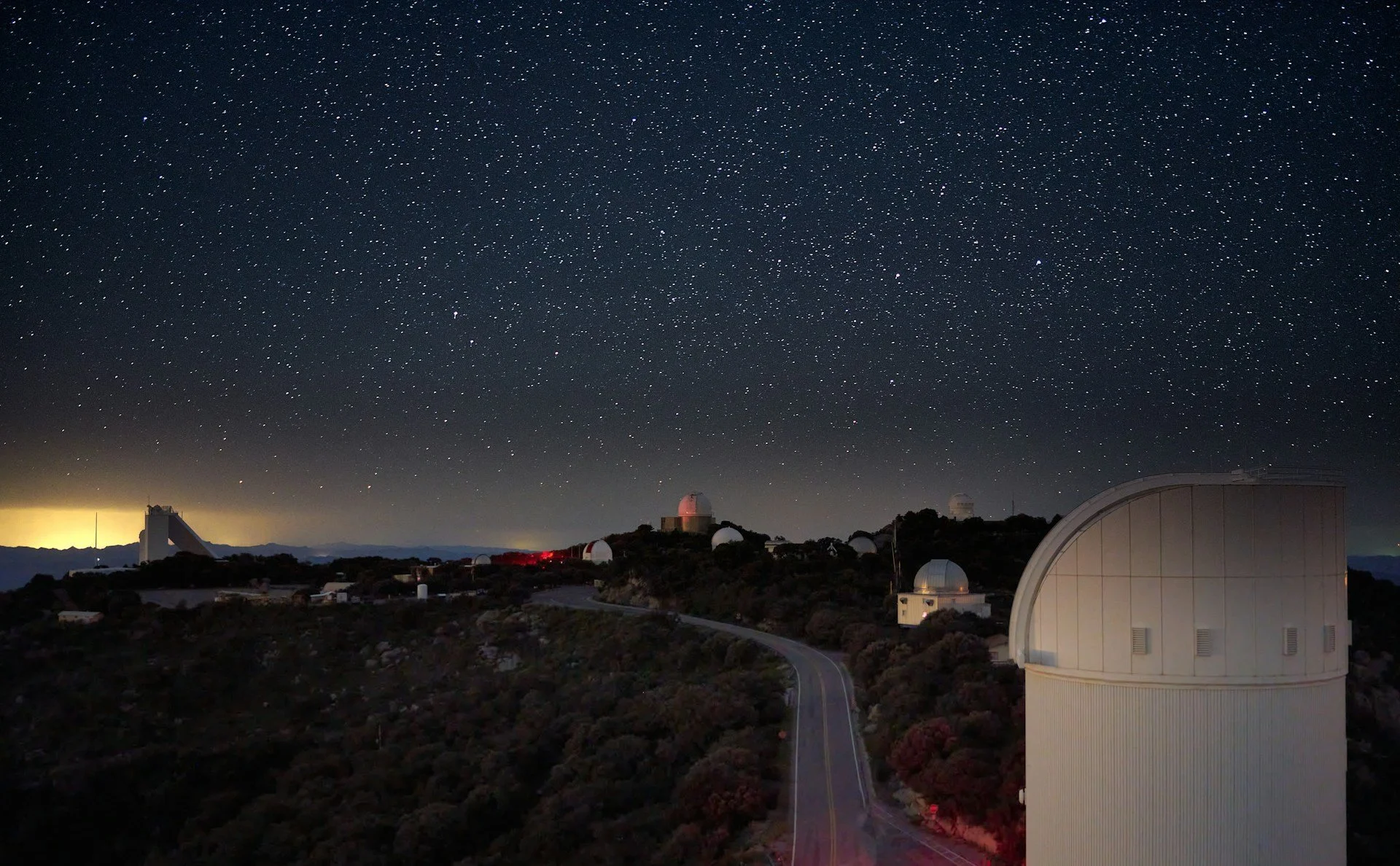
Photo by Ruoyu Li
What makes Tucson a dark sky city? Tucson has maintained outdoor lighting ordinances for decades that limit light pollution, making it one of the darkest cities of its size in the country. The area is home to world-class observatories, several Dark Sky designated parks, and the global headquarters of DarkSky International. For buyers, that commitment to preserving the night sky shapes everything from neighborhood aesthetics to the kind of lifestyle Tucson makes possible year-round.
Why Tucson Takes the Night Sky Seriously
Most cities grow brighter as they grow larger. Tucson has done something different.
For decades, Tucson has been dedicated to preserving its dark skies through strict light pollution regulations, allowing it to host world-class observatories, research institutions, and public astronomy programs. Those ordinances govern things like streetlight shielding and commercial lighting after hours, and they've held even as the city has continued to expand.
Tucson is home to the headquarters of DarkSky International, the organization dedicated to reducing light pollution worldwide. That's not a coincidence. The city's location in the high desert, combined with its policy decisions over many years, made it a natural fit for that role.
What's Actually Out There to See
The observatories and public programs around Tucson are genuinely impressive, and most are accessible to anyone who wants to visit.
Kitt Peak National Observatory sits about 50 miles southwest of the city and offers public stargazing programs where visitors can observe through professional-grade telescopes. Expert guides illuminate the mysteries of the cosmos, transforming a night of stargazing into an unforgettable journey through space and time.
Mt. Lemmon SkyCenter is located at over 9,000 feet in the Santa Catalina Mountains and is home to the largest dedicated public telescope in the United States.
Flandrau Science Center and Planetarium on the University of Arizona campus offers planetarium shows and interactive exhibits, making it a solid option for families or anyone looking for a daytime astronomy experience.
Saguaro National Park recently earned the Urban Night Sky Place designation, recognizing sites near large urban areas whose planning and design actively promote an authentic nighttime experience in the midst of significant artificial light. It's the second National Park Service unit in the country to receive that certification.
Tucson's Astro Trail, officially unveiled in January 2025, strings together 11 of the most visitor-friendly astronomy stops in a downloadable map. It's a good starting point if you're new to the area and want to explore what's available.
What Dark Sky Living Looks Like Day to Day
For most Tucson residents, this isn't about visiting observatories on special occasions. It's more subtle than that.
Street lighting in Tucson is shielded and directional, which keeps the glow lower and more contained than in most cities. On a clear night away from major commercial corridors, the sky is noticeably darker than what people coming from other metro areas are used to.
Tucson has a very dark, very dry sky and more than 300 cloudless days a year. That means the opportunity to actually use the night sky, whether from your backyard, a nearby trailhead, or a state park, is consistent across most of the year.
For people who value that kind of connection to the natural environment, it becomes part of daily life in a way that's hard to replicate in denser, brighter cities.
Why This Matters for Buyers
Dark sky preservation isn't typically the first thing buyers think about, but it's worth understanding how it shows up in the Tucson real estate landscape.
Neighborhoods on the outskirts of town, in the foothills, or near parks and open space tend to offer the best night sky access. Areas closer to the commercial corridors along major roads will have more ambient light, as in any city.
The outdoor lighting standards also contribute to a certain aesthetic across Tucson's neighborhoods. Shielded, lower-intensity lighting keeps neighborhoods feeling more open and less glaring, especially compared to newer developments in other Sun Belt cities.
If stargazing or simply having a dark, quiet outdoor environment matters to you, it's worth paying attention to which direction a property faces and how close it sits to commercial activity. That's a conversation worth having with your agent when you're evaluating specific neighborhoods.
Frequently Asked Questions
Is Tucson actually dark enough to see the Milky Way?
In many parts of Tucson and the surrounding area, yes. Locations closer to the urban core will have more light interference, but neighborhoods near the foothills, state parks, or open desert can offer surprisingly clear views. Getting even a short distance outside of the city significantly improves conditions.
What is DarkSky International and why is it based in Tucson?
DarkSky International is the leading global organization working to reduce light pollution and protect natural darkness. It's headquartered in Tucson because the city has been a leader in dark sky policy and is surrounded by world-class astronomical research institutions, making it a natural home base for the organization.
Does living near an observatory affect property values?
There's no general rule that applies to all observatory-adjacent properties, and this varies by location. What tends to matter more to buyers in those areas is the access to open space, the quieter environment, and the overall feel of being outside the city's commercial core. If you're curious about specific neighborhoods, it's worth talking through the options directly.
The Bottom Line
Tucson's dark skies are not just a novelty. They reflect a long-standing community commitment to managing growth thoughtfully and preserving what makes the desert environment worth living in.
For buyers, that means a city where the outdoors extends well into the evening, where public spaces are genuinely usable after dark, and where the natural landscape is protected in ways that most cities don't prioritize. It's one more reason people who move here tend to stay.
Presented by Kristen Glasheen, REALTOR®, Glasheen Real Estate, Long Realty Company.
Contact Kristen:
☎️ Call: 520.345.9360
📱 Text: 520.345.9360
📧 Email: Kristen@GlasheenRealEstate.com
🏠 Search Homes
Disclaimer: This content is for informational purposes only. Observatory programs, park hours, and event availability are subject to change. Confirm current details directly with each venue.