
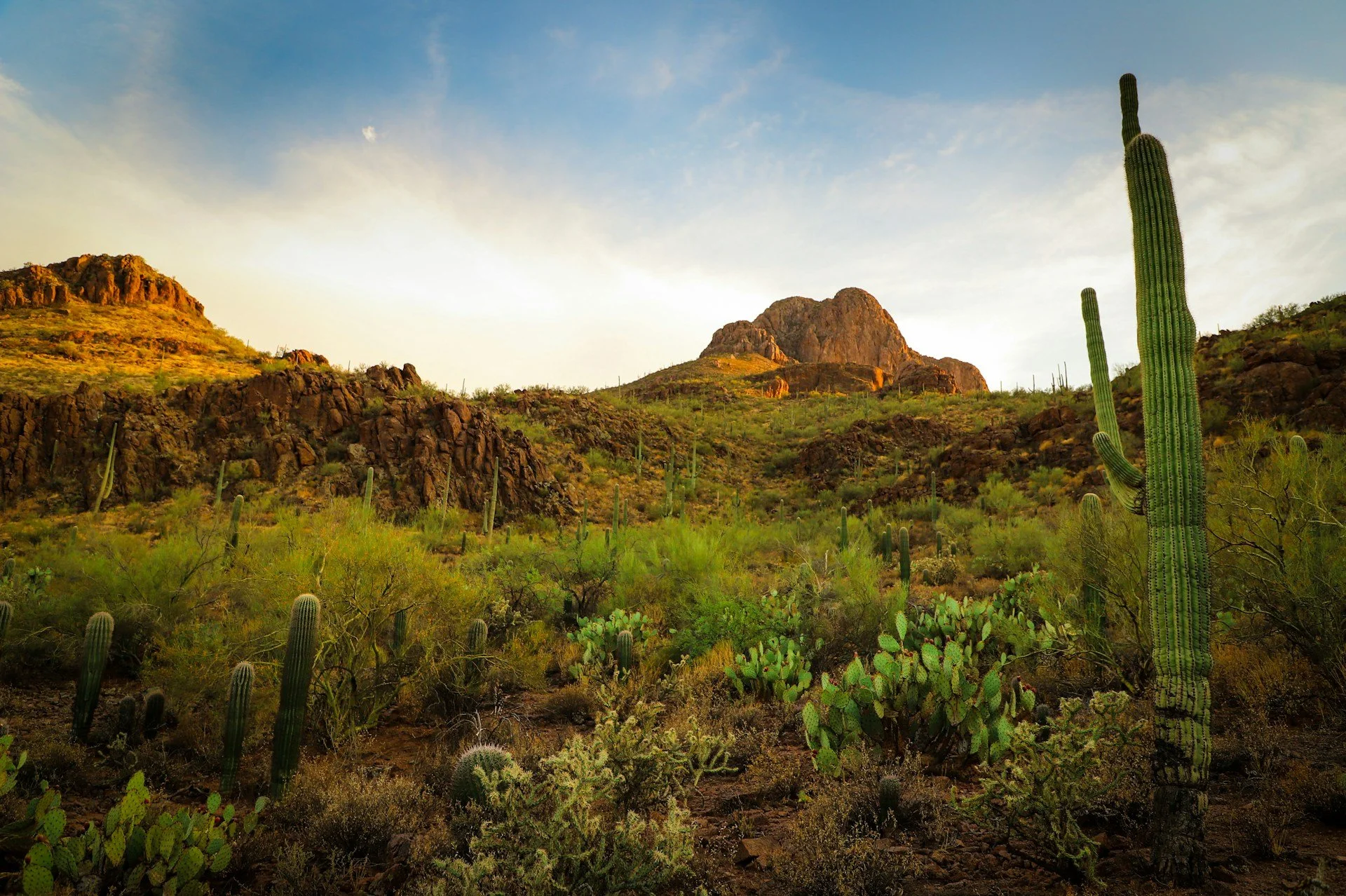
Photo by Frankie Lopez
Is Tucson a good place to retire? Tucson offers retirees a warm desert climate, a cost of living slightly below the national average, strong healthcare access, and a range of 55+ communities from active adult neighborhoods to independent living. Arizona does not tax Social Security income and has no estate or inheritance tax, which makes it financially attractive for many retirees. Tucson's outdoor lifestyle, cultural scene, and proximity to mountains and nature add to the appeal for those looking for an active, affordable retirement.
Is Tucson a Good Place to Retire?
More people are asking this question than you might think.
Tucson keeps showing up on retirement radar, and not just because of the sunshine. There are real, practical reasons people are choosing Southern Arizona for this chapter of life. Here is what you actually need to know.
What Is the Cost of Living Like in Tucson for Retirees?
It is one of the more manageable cities in the West.
Tucson's overall cost of living runs about 2% below the national average, with housing costs roughly 11% lower than the U.S. average and food expenses well below average as well. For retirees on fixed incomes, that matters.
It is not as cheap as it was five years ago, but compared to California, Colorado, or the Pacific Northwest, the difference is still significant.
What About Taxes in Arizona for Retirees?
This is one of the strongest selling points.
Arizona does not tax Social Security income and has no estate or inheritance tax. The state operates on a flat income tax structure, and up to $2,500 of retirement income from federal, state, and local government plans is also tax-exempt.
Sales tax is on the higher side, but groceries and prescription drugs are exempt from state sales tax, which matters for most retirement budgets.
How Is Healthcare Access in Tucson?
Solid, especially compared to smaller or more rural Arizona communities.
Tucson has Banner University Medical Center, Tucson Medical Center, and a strong network of specialists, clinics, and urgent care options throughout the metro. The University of Arizona's medical presence also contributes to the quality and availability of care here. Arizona is widely considered a strong destination for retirement healthcare, and Tucson is one of the better-served cities in the state.
What Is the Lifestyle Like for Retirees in Tucson?
Active, outdoor, and surprisingly cultural.
Tucson offers stunning mountain views, scenic trails like Sabino Canyon, more than 40 golf courses, and a rich cultural scene with art galleries, theaters, and a diverse food landscape. The University of Arizona brings lectures, performances, and events that many retirees take full advantage of.
The pace here is relaxed but not sleepy. There is always something going on without the noise and density of a bigger city.
Winters are the real draw. From November through April, the weather is exceptional. Warm, dry, and sunny nearly every day.
What About Summer Heat?
Worth being honest about.
Tucson summers are hot. June and July regularly hit triple digits, and that is not for everyone. The good news is that many retirees spend summers elsewhere and return in the fall, which is its own kind of lifestyle that works very well here.
If you prefer year-round outdoor living, higher elevation communities like the Catalina Foothills stay somewhat cooler and offer more comfortable summers than the lower desert areas.
What Types of Retirement Communities Are in Tucson?
Quite a range.
The Tucson area has 15 active 55+ communities, including four large communities with over 1,000 homes, several mid-sized options, and a range of smaller communities with under 500 homes. SaddleBrooke, Sun City Oro Valley, and Del Webb communities in Vail and Marana are among the most well-known, each with different amenities, price points, and vibes.
Beyond 55+ communities, many retirees in Tucson simply buy a standalone home in a neighborhood they love, whether that is Oro Valley, the Foothills, or Marana, and build their own routine without the HOA structure of a planned community.
Is Tucson Better for Active Retirees or Those Looking to Slow Down?
Both, honestly.
If you want to hike, golf, bike, or stay active year-round, Tucson supports that completely. If you want a quieter life with easy access to nature, good food, and manageable costs, it supports that too. The city tends to meet people where they are.
The Bottom Line
Tucson is a genuinely strong retirement option, not just because of the climate, but because the finances, healthcare, lifestyle, and housing choices all point in the right direction for a lot of people.
If you are exploring what a move to Southern Arizona could look like, whether that is a 55+ community or a home of your own, that is exactly the kind of conversation worth having before you decide.
Contact Kristen to talk about what retirement living in Tucson looks like for you
Disclaimer This content is for informational purposes only and does not constitute financial, tax, or legal advice. Tax laws and costs are subject to change. Please consult a qualified financial advisor or tax professional for guidance specific to your situation.
Presented by Kristen Glasheen, REALTOR®, Glasheen Real Estate, Long Realty Company.